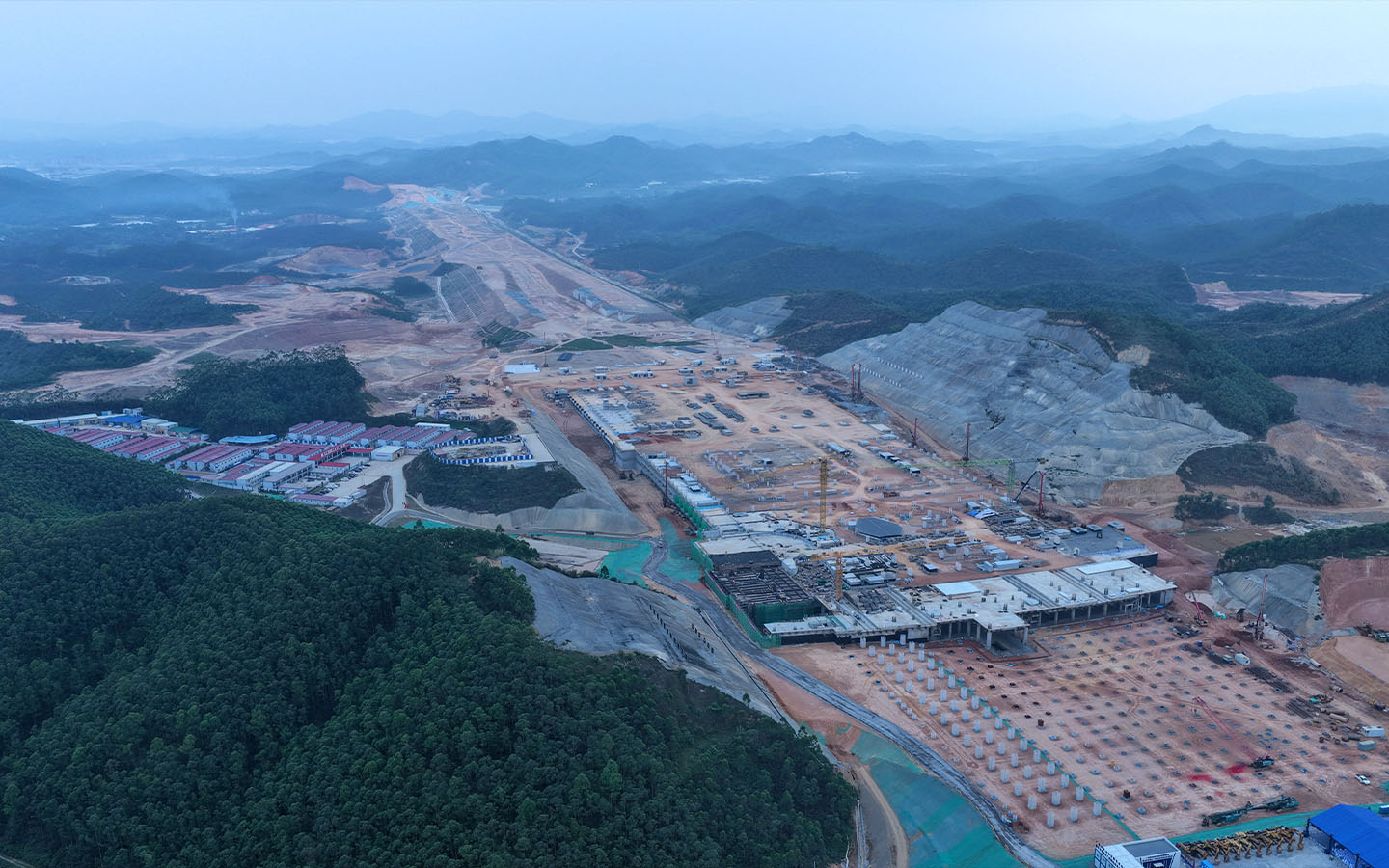
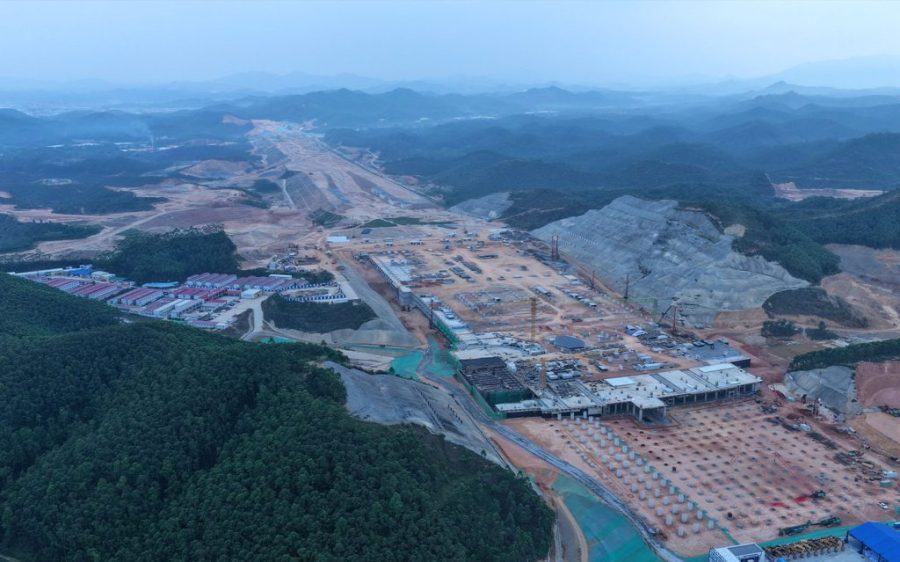
Construction has begun on a new airport in the western Pearl River Delta, adding a major aviation hub to the Greater Bay Area and reshaping how 20 million people move around the region. The Pearl River Delta Hub (Guangzhou New) Airport, located in Gaoming district of Foshan, formally broke ground on Wednesday and is designed to plug a long-recognised gap in air links west of the delta, Xinhua reports.
Positioned at the geographic centre of Foshan, Zhaoqing, Jiangmen and Yunfu, the airport is expected to directly serve those four cities while easing pressure on Guangzhou Baiyun and Shenzhen Bao’an, which currently handle the bulk of the GBA’s traffic. Guangdong officials say the new hub will anchor a more balanced “multi‑node” network, better connecting smaller manufacturing cities and inland corridors.
With a total investment of 41.81 billion yuan (about US$6.1 billion), the project will feature two widely spaced parallel runways, a 260,000-square-metre terminal and 94 aircraft stands. Once fully operational, it is designed to handle 30 million passengers, 500,000 tonnes of cargo and mail, and 260,000 aircraft movements a year, putting it in the same league as many mid-sized international gateways.
[See more: Guangzhou’s Baiyun International Airport secures top award amid record growth]
The new hub comes as the Greater Bay Area’s airport cluster is already emerging as one of the busiest in the world. In 2024, total passenger throughput at the GBA’s seven existing airports exceeded 200 million, while Guangzhou Baiyun completed test flights for its fifth runway and Shenzhen Bao’an calibrated a third, underscoring the region’s escalating demand for air travel.
Planners say the Foshan project will support Beijing’s goal of lifting the GBA’s economic output beyond 15 trillion yuan in 2025 by tightening links between export zones, innovation centres and global markets.
Officials in Guangdong and Hong Kong have framed the broader cluster strategy as one of complementary roles rather than direct duplication, with Hong Kong International Airport focusing on long‑haul routes while new and expanded mainland hubs absorb more domestic and regional growth.