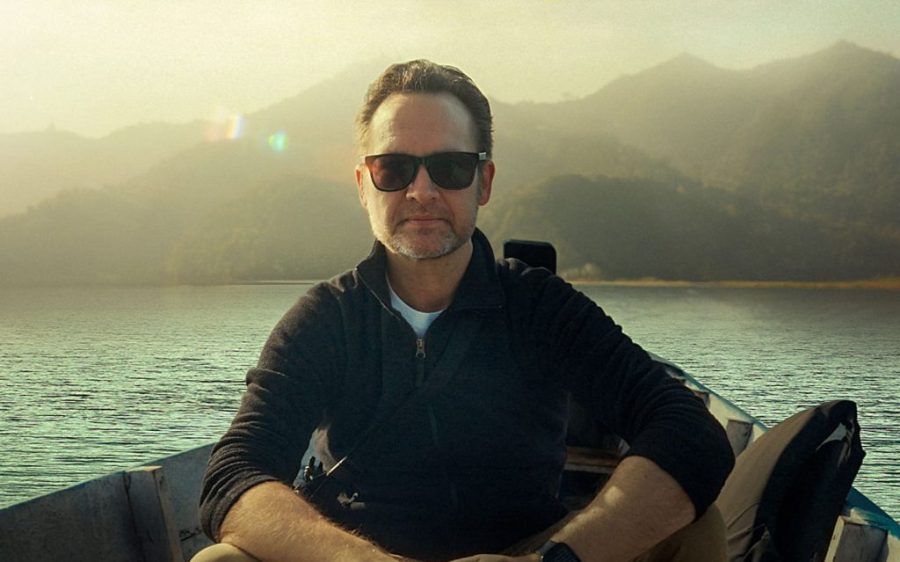
Travel shows have long been part of the YouTube landscape, although finding one with practical and reliable information, as well as high production values isn’t always easy.
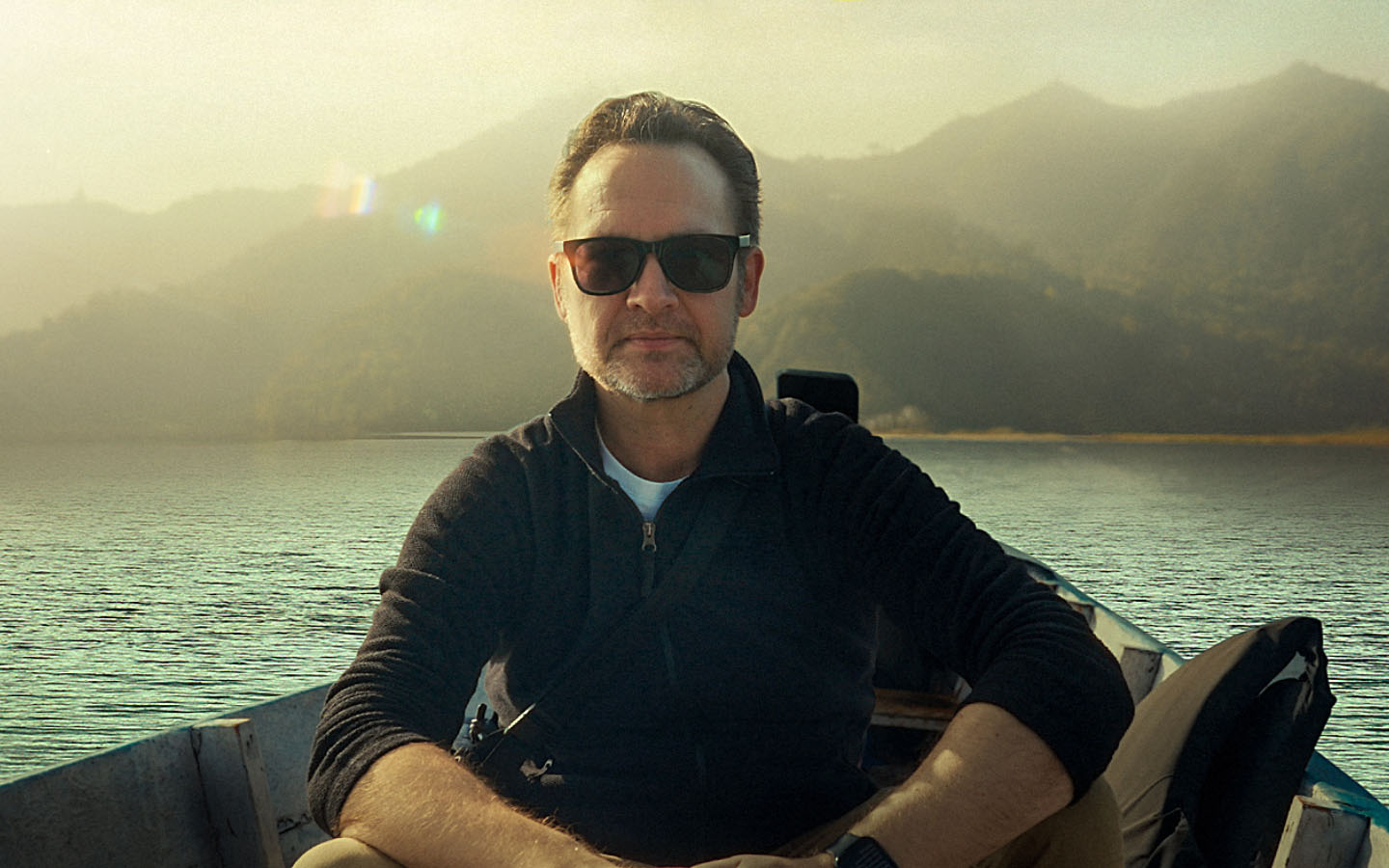
That’s where Alex Hunter’s well-regarded YouTube travel channel, Attaché, comes in. Since 2015, the branding expert, keynote speaker and angel investor has been producing Anthony Bourdain-inspired documentaries that allow viewers to vicariously experience a range of destinations in an authentic and insightful manner.
Each guide features useful tips that cover a range of categories, including food, transport, money and etiquette. Topping it all off is Hunter’s introspective and deeply personal narration.
For Hunter, Attaché is very much a love letter to his longstanding passion of travel, which has been part of his life from as far back as he can remember. “I come from a long line of travellers. It’s been in my blood forever,” the former global head of online for the Virgin Group says.
Hunter’s rich travel and international experience is well-reflected in his upbringing. Born in the US to British parents, the YouTuber moved to Hong Kong at the age of 10, shuttling between boarding school and the city several times a year.
[See more: What is Paris Syndrome and how can you avoid it?]
The idea to create a travel show, however, didn’t emerge until Hunter was well into adulthood. While working as speaker on brand loyalty psychology, he found himself zipping to many destinations around the world for short periods of time, with no way to access “interesting” and “engaging” information about the destination he was in.
Hoping to fill this gap, Hunter enlisted the help of an award-winning videographer friend, Greg Barnes, who spent four hours helping him film a pilot episode in London’s Paddington Train Station. It turned out to be a success.
“Here we are 11 years later – we’ve done 75 or 76 episodes all over the world, and have enjoyed every second of it,” Hunter says.
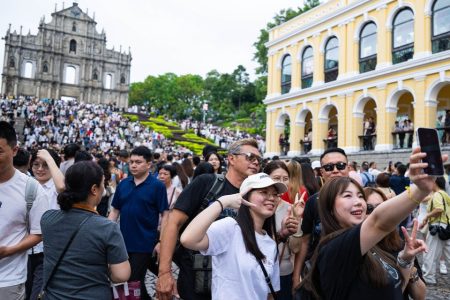
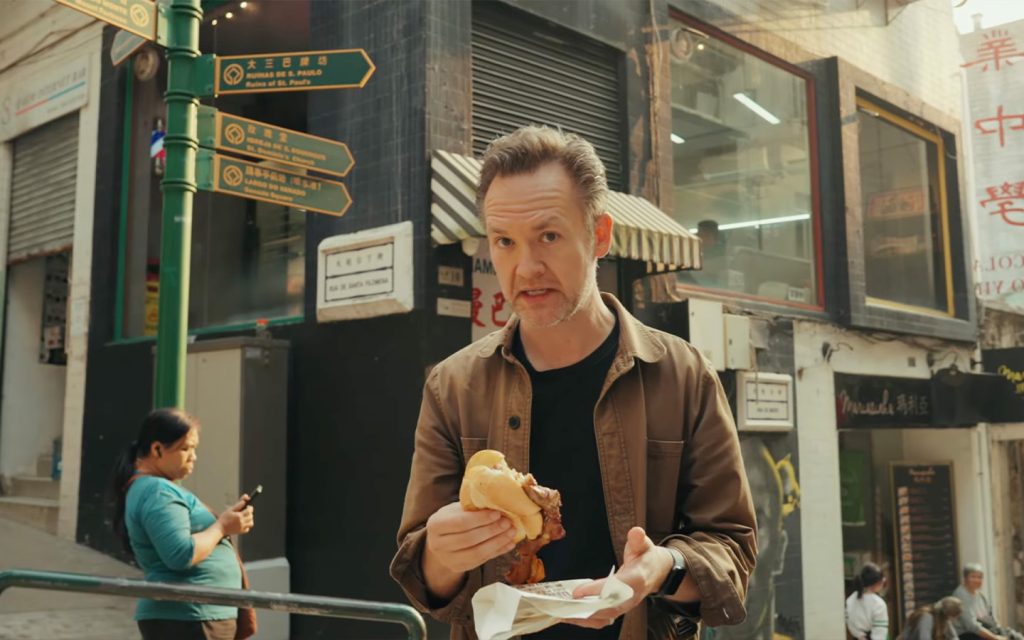
The Bay spoke with Alex Hunter about Attaché, his travel experience and opinions shortly after the release of his Macao episode last month.
This interview has been edited for brevity and clarity.
Why was the name Attaché chosen for your channel?
I was quite fascinated by this idea that embassies all over the world have cultural attachés whose job it is ostensibly to make sure that visiting diplomats don’t make fools of themselves. They briefed them on the do’s and don’ts, the etiquette, especially around protocol, food, language and things like that.
[See more: 10 questions for Chinese Cooking Demystified’s Stephanie and Chris]
I thought, what a fun role to help people understand not just the kind of tourist attractions, but how do you enter a city, country or region gracefully and with some dignity and with some respect. It’s tongue in cheek, but that’s where the name came from.
Were you familiar with Macao prior to the filming of the Macao episode?
Embarrassingly, I had never been to Macao prior to filming the episode and to this day I interrogate my parents as to why we never went. I think – and I saw this reflected in the comments of the episode and in anecdotal messages I’ve had from family and friends that grew up in Hong Kong or spent a lot of time there – Hong Kong and Macao take each other for granted. You look slightly further afield, maybe Taiwan, Singapore, Malaysia or Japan, when you’ve got a week’s holiday, but it was always there.
[See more: Here’s a guide to the ‘other’ Greater Bay Area cities]
Of course, the Grand Prix was the big thing that came up regularly as somebody looking towards Macao from Hong Kong, as well as the other obvious attractions that Macao offered. I was certainly familiar with it, but I had never ever been. I regret that it’s taken me this long.
Your Macao episode didn’t feature the Cotai Strip. Was there a reason for that?
We frankly ran out of time. We were so enamoured with the areas that showed up in the episode that by the time we felt like we had captured it, we looked at the clock and thought, “oh my goodness, we’ve run out of time.” That’s a failing on our part.
This often happens in cities the size of Macao and bigger. We let serendipity take us by the hand and lead us through a city, and sometimes it doesn’t give. I mean, it would be impossible and frankly not fair on a city for us to try and say, “We’ve covered the entirety of a place.”
There will always be unfortunate omissions that I regret. The good news is that it’s such a great reason to get back and do a follow-up episode.
Tell me about an unforgettable travel moment you’ve had.
We had a moment in Fukuoka. The day was frustrating – our camera equipment didn’t work, the weather was uncooperative, we didn’t get any of the footage we wanted. We ended the evening in an izakaya and we had a couple of cold beers and some fried chicken. There were two Japanese ladies who sat next to us. They didn’t speak a word of English and we didn’t speak a word of Japanese, and they wanted to engage with us because we were the only non-Japanese people in the bar.
We started using Google Translate to pass messages back and forth and say what we were doing in Japan and why. Greg leaned over to show a translation and one of them erupted in delight. She pulls up her sleeve and she reveals that she is wearing the exact same watch as Greg – same model, same colour, everything.
That could only happen because we had a frustrating day and we were sharing some local food in a local bar. It just made me happy. Go and find the casual eateries and bars and do whatever you can to make a connection with people. It just made me so happy, and I’ll never forget that moment as long as I live.
Do you have any controversial travel opinions?
I think the one that causes the most discussion is I truly believe that overplanning a trip is the most fatal mistake a traveller can do. I have so many friends that plan their itineraries down to the minute. I think that is such a frustrating way to travel because you remove any chance of serendipity.
The best way to discover a location is to wander. It’s impossible to get lost in 2026. If you got a phone in your pocket, you cannot get lost. Just wander, find somewhere and allow yourself the time to just go, “I don’t know what we’re going to do today. Let’s just see where the day takes us” and you will discover and find the most incredible experiences.
The only other controversial take I have is I’m not the world’s biggest fan of cruises. I don’t really count that as travel. I think it’s basically a floating hotel. I worry about the impact they have on local economies, local restaurant tours, shopkeepers and residents.
What’s the biggest faux pas you’ve committed as a traveller?
It almost always comes down to food. I admire cultures that are understanding when people like me with clumsy hot dog fingers don’t fully grasp the nuances of how a dish should be consumed, presented or offered. The amount of times where I’ve done that is legion.
Travel etiquette is something that is incredibly important to me. I research it a lot. I think it’s the most important thing that we can equip ourselves with as travellers. I think if I’ve done any major faux pas, it’s inadvertently.
If you could only travel to one country for the rest of your life, where would it be?
I would say given that we’ve done nine episodes there, there is something that inexorably draws me back to Japan. I love Hong Kong. Hong Kong is very precious to me, but I think I would have to say Japan because we filmed in the northernmost parts of Hokkaido and in the most southern parts of the Okinawa archipelago in Ishigaki, and I’ve never been disappointed. There’s always something new to discover. We’ve barely scratched the surface, so I think my reluctant answer would be Japan.
Food is a very important part of your travels. Which country or region do you think has the best cuisine?
I don’t know if anyone has the best cuisine. I think there are some cities around the world that are the best food cities. I would say New York is one of them. I would argue that you can find great representations of almost any cuisine on earth in New York City, and it will be of a fantastic quality. As well, there’s the homegrown experiences and food like a New York diner and a bodega breakfast sandwich. That is really, really hard to beat.
What do you say to people who want to travel to a particular country like India or Egypt, but are afraid to step out of their comfort zone?
I understand the hesitation that people might have and if you go on some of the subreddits on Reddit, you’ll get a lot of fear mongering and a lot of encouragement, as well, and horror stories. But I think with a little bit of pre-planning and a little bit of bravery, you will unlock some of the most incredible travel memories you will ever create by stepping out of your comfort zone.
No one has created a lifelong memory by doing the same thing over and over again, and I struggle to wrap my head around people who go to the same place every year for the holiday. I can understand if it works and you have a good time and it’s familiar and it’s your happy place, great. But I think if you just push yourself just a little bit, get out of that comfort zone, the sensory overload that you will experience on arrival and throughout your trip will be worth every penny by orders of magnitude.
Take that trip that may sound a little bit too off the beaten track. Do your research, of course, but it will reward you 10 times over every single time.
Are there any travel books or resources you would recommend?
I got hooked by the work that Anthony Bourdain did. I think especially his later work, Parts Unknown, was an unparalleled balance of people, culture, curiosity and storytelling, and I reference it to this day when we visit places. I think it’s a great gateway drug for travellers.
For travellers, there are a lot of great content creators out there that allow people to armchair travel. Indigo Traveller – he’s amazing. He goes to a lot of places that I think 99 percent of us wouldn’t dare to travel to, but they still have stories worth telling, and those guys are very different ends of the spectrum.
If you want to go back in time a little bit, Gavin Young was a travel writer in the 60s, 70s and 80s. He wrote Slow Boats to China. That is the most evocative, beautiful travel writing I’ve ever read in my life. I would encourage you to find a dog-eared copy of that in your local charity shop or library if you want to feel like you’re in a time machine.
What’s the biggest misconception that people have when travelling overseas?
That it will be like what it is in the restaurants that represent that country or cuisine or culture back home. People from the US go to Italy and are concerned that it doesn’t look like the Olive Garden [a US Italian-American restaurant chain] or doesn’t taste like the Olive Garden. It’s going to be very different from anything you’ve ever experienced because it’s not where you’re from and that’s a beautiful and empowering thing.
I think also assuming that everyone speaks English or your language is a fatal mistake. Try and learn as many basic phrases as you can. Talking louder in English isn’t going to help you be understood.
Go in with eyes wide open. Expect it to be nothing you’ve ever experienced before and you will have a positive experience.
What’s the future for Attaché?
We’e moved onto television. Our episodes are now on some of the big streaming platforms – Tubi and Roku. We’re developing a new show that will sit under the Attaché brand, which focuses on casual eateries – a New York diner, a London greasy spoon and a Hong Kong cha chaan teng.
What is the tie that binds them? What are the things that they have in common and what makes them unique to where they are? Who are the people that go in there and work there? What do they eat? When do they eat it? We’ve just started work on that project. Hopefully, it will see the light of day in the second half of this year. We’ve spent about a little over a year on that already and I’m very excited to make it.