
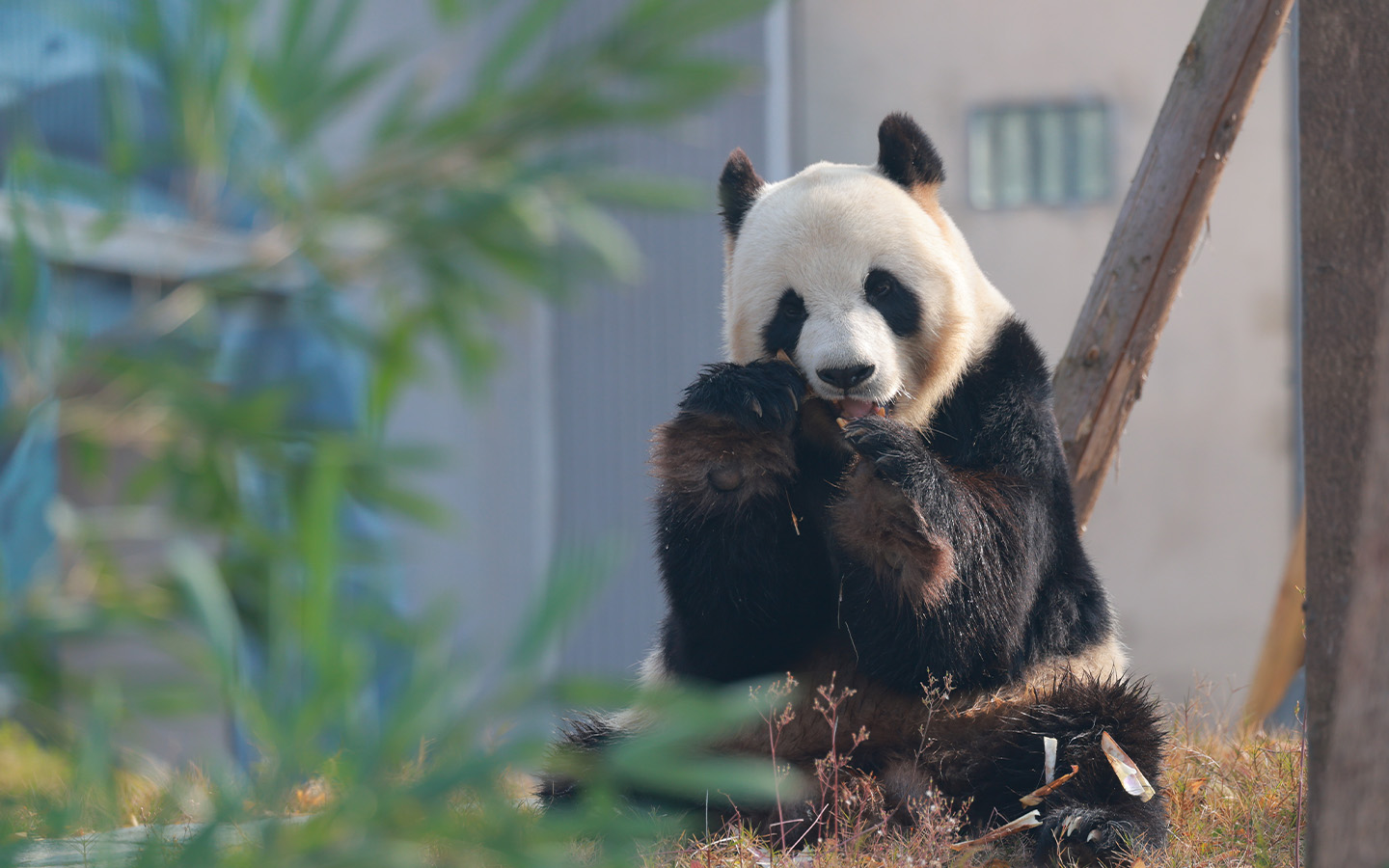

A new giant panda conservation base in southwest Sichuan province has opened to the public on a trial basis, expanding the country’s national network for panda breeding, research and education, China Daily reports.
The Mianyang base, part of the China Conservation and Research Center for the Giant Panda (CCRCGP), welcomed nearly 6,300 visitors on Monday – its first day of public access.
Covering around 120 hectares, the site currently houses 20 giant pandas aged between 4 and 27. The pandas, which started arriving at the base from early November (some travelled all the way from Finland), have reportedly adapted well to their new environment and are reported to be in good health.
[See more: Mozambique could be redrawing the borders of its conservation areas]
The base took three years to build and was designed to resemble a natural panda habitat in the mountainous province, which is home to more than 70 percent of China’s wild giant panda population. It includes 54 enclosures serving different functions such as breeding, cub rearing, adult exhibitions and disease control.
Smart technology has been incorporated into the base’s panda management programme, including automated systems for safety monitoring, temperature and humidity regulation, and light-based disinfection aimed at improving animal health and immunity.
There are about 1,900 wild giant pandas living in China. In 2016, the International Union for Conservation of Nature reclassified the species from “endangered” to “vulnerable”, a positive change resulting from the country’s long-term conservation efforts. The CCRCGP has been working to grow panda populations and protect China’s biodiversity since the 1980s, when it had six of the animals in captivity. Today it has more than 380 in its care.