

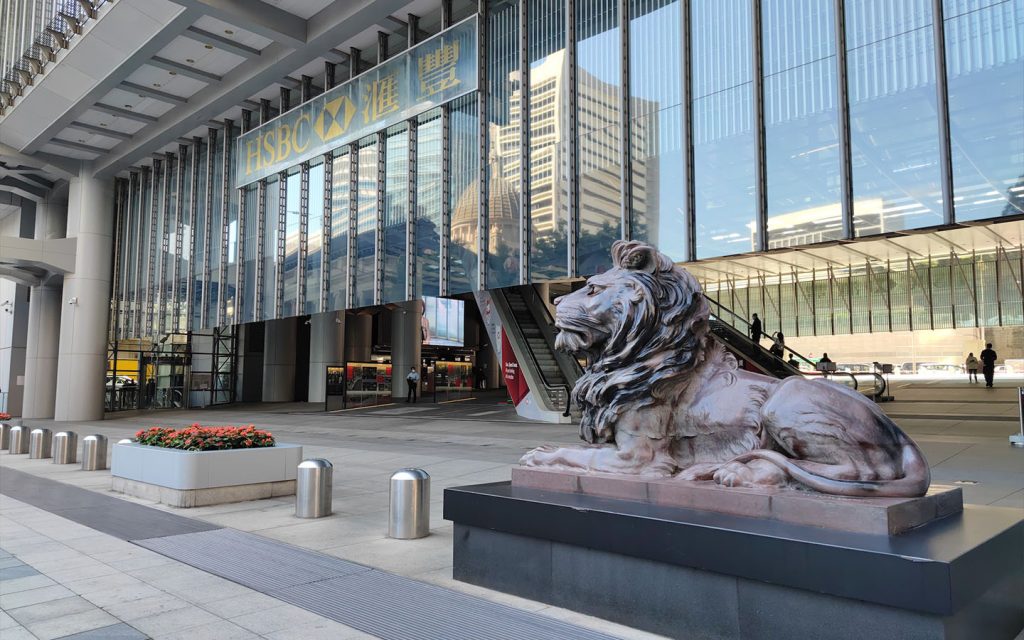
Hong Kong sits at the cusp of issuing the city’s first round of stablecoin licenses as the financial centre reinforces its digital hub ambitions. The move comes just months after the SAR enacted its Stablecoins Ordinance back in August, representing the world’s first dedicated stablecoin law, and a year since the Securities and Futures Commission (SFC) approved exchange-traded funds linked to bitcoin spot prices.
Crypto enthusiasts have welcomed the move as many highlight the advantage of deploying blockchain technology to improve cross-border transactions and expedite payment settlements. The initial wave of licensed stablecoin issuers in Hong Kong will test whether virtual money infrastructure can translate into real business gains for an economy positioned at the heart of intra-regional trade.
But the rollout is unfolding as cryptocurrencies have lost nearly half their market capitalisation since October. Unlike virtual money that runs on decentralised ledgers, major stablecoins are backed by fiat currency reserves held by the issuer, anchoring them closer to par values worth more than $300 billion.
[See more: Hong Kong stablecoins deepen US dollar peg while opening a path for offshore RMB tokens]
Those trajectories distinguish the two assets, comments Ying Wang, partner at Simmons & Simmons, speaking to The Bay. While cryptocurrencies trade closer to sentiment driven equities, the Singapore-based tech expert argues that stablecoins are proving to be a more suitable bridge linking physical and digital economies.
“Jurisdictions with clear regulatory delineation between crypto derivatives and securities are facilitating viable structures that have proven to create commercially driven pathways for stablecoin adoption,” she adds, describing the growing circulation of stablecoins as evidence of rising practical uses beyond crypto trading.
Costs recognised first
Hong Kong’s ordinance sharpens this contrast as the new stablecoin licenses positions the SAR to capture the market’s latent potential. Fuelled by rising adoption, analysts project that the stablecoin market could exceed $1.6 trillion by 2030 with Asia driving a significant share of growth.
But with the local regulatory framework adopting the “same activity, same risks, same regulation” parameters, the initial expenses stemming from custody, distribution, and other operational matters are likely to materialise before the financial savings become visible.
Experts are looking beyond those costs, viewing stablecoins and tokenisation of real-world assets as broadening market access within a regulatory framework that connects traditional businesses with Web 3.0.
[See more: How Hong Kong’s digital aspirations are transforming Macao’s financial identity]
“For any licensed financial institution, it’s more than just saving on fees, it’s a step toward modernising how money moves,” comments Ian Fong of Money20/20, a premium content, sales, and networking platform for the global money ecosystem.
“Compliance isn’t just a cost, it is a foundation of trust,” the vice president of content Asia says, adding that “strong KYC (know your customer) and AML (anti-money laundering) frameworks are what give digital infrastructure its integrity.”
GBA and Macao
Besides first‑mover advantages, licensed Hong Kong intermediaries are expected to set the industry tone by demonstrating how stablecoins can drive operational efficiencies and deepen financial integration with the Greater Bay Area (GBA).
With cross‑border transactions woven into the region’s economic fabric, Hong Kong is expected to become the world’s largest cross-border booking centre by 2029, according to a joint report by Boston Consulting Group in collaboration with Aptos Labs and Hang Seng Bank. Such linkages allow neighbouring Macao, whose ‘One Country, Two Systems’ formula builds a parallel digital finance hub that reinforces a GBA regulatory sandbox, to effectively broaden the scope of pilot testing.
[See more: Bigger than gaming: inside Macao’s trillion pataca bond market]
As Hong Kong develops its stablecoin infrastructure, Macao’s most compelling role is not as a competitor but as a high-volume, consumer-facing adoption testbed, Ying Wang explains, noting that given the city’s handling of cross-border transactions, Macao becomes a natural fit for stablecoin applications.
Within the GBA, potential alignments with sovereign-backed e-MOP, e-HKD, and e-CNY tokens can map out pathways for stablecoin issuers to expand beyond Hong Kong and Macao. Moody’s Ratings observes that this trajectory supports digital bond listings and cross-border fintech innovation trials already underway, including the mBridge project, a multi–central bank digital currency platform jointly developed by the HKMA, the PBoC, and the central banks of Thailand and the United Arab Emirates.
Policy clarity
Financial intermediaries should expect higher funding costs as licensed stablecoin entities compete for traditional bank deposits, with the extent of margin pressure depending on the broader adoption of digital wallets in the future, comments Arnie Cho, senior banking & payments analyst at GlobalData.
“If customers are not holding digital tokens, fewer merchants will engage in crypto,” Cho argues, noting that retailers that have adopted digital wallets operate in volatile currency markets where holding decentralised money is viewed as a derisking measure.
These developments are taking place as Beijing reinforces its ban on cryptocurrencies, with regulators requiring clear proof that any blockchain-based payment instrument remains under centralised government oversight. Although cryptocurrencies and stablecoins serve distinct roles within the digital finance ecosystem, stablecoins are still predominantly employed as trading instruments to buy and sell decentralised digital assets.
[See more: Hong Kong’s wealthiest see record fortunes as stock and property markets revive]
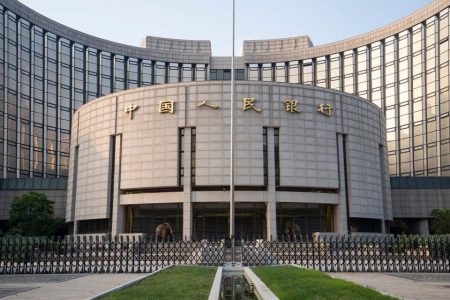
Back in February, the People’s Bank of China and the China Securities Regulatory Commission introduced a new framework clarifying that onshore tokenisation of real-world assets is prohibited unless explicitly approved, while offshore tokenisation linked to mainland assets is permitted under stringent oversight.
Despite the technological benefits feeding margin enhancements, “for Beijing, monetary sovereignty and anti-money laundering worries need to be addressed directly to win policy confidence” Ying Wang explains, adding that any licensed entity will rightly demand regulatory clarity before meaningfully committing to stablecoin adoption.