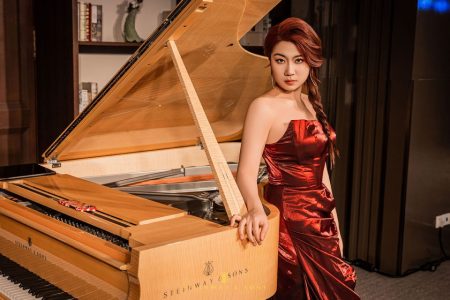
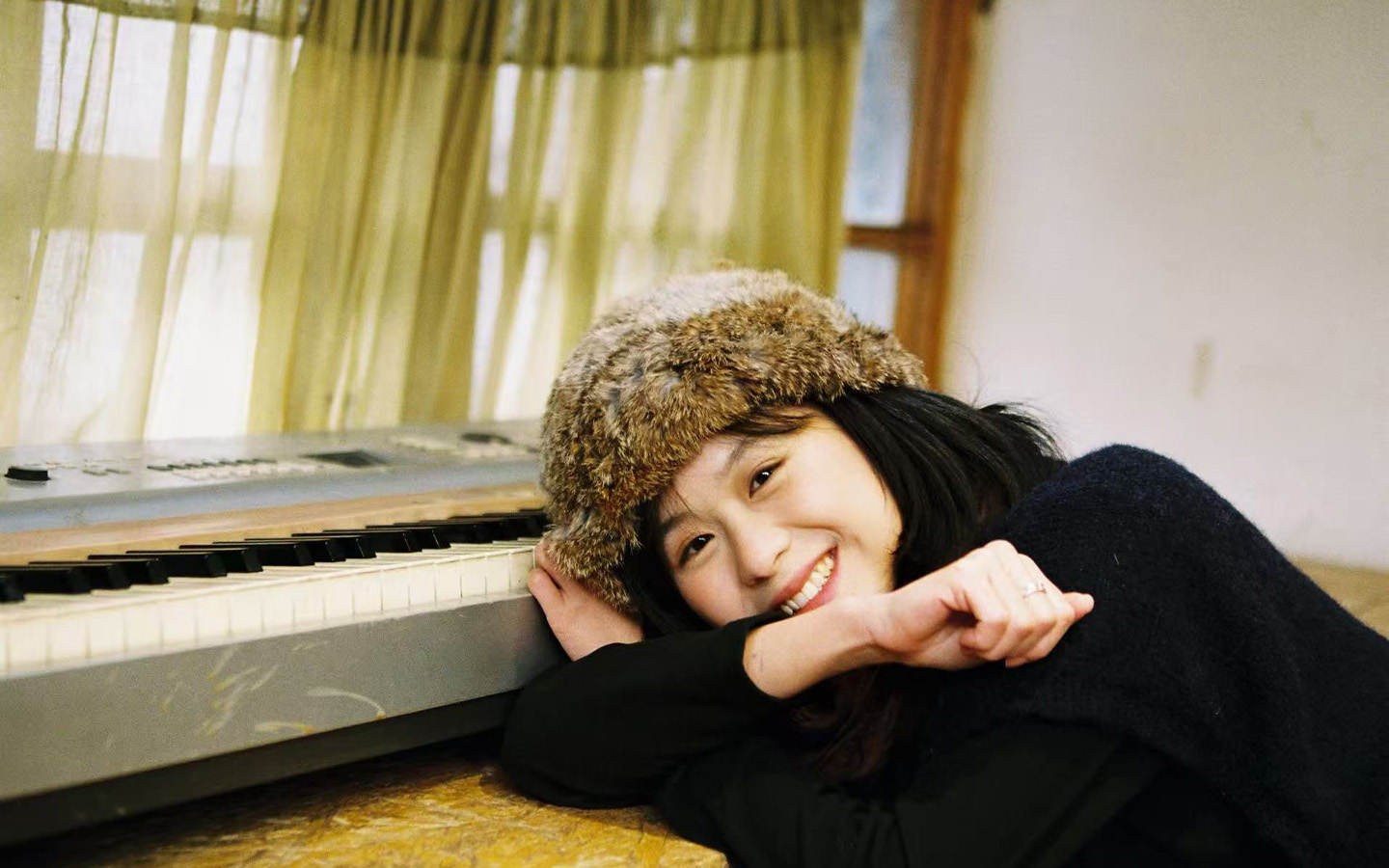
In the 21st century, as people’s attention is captivated by countless small glowing screens and traditional reading seems to have been swept away by the current of technology, a local female poet, born in the year 2000 and attending this year’s Macau Literary Festival, has cast her anchor in the “ancient” world of literature, steadfastly writing from her heart.
Zita Si Tou, a familiar name for those who follow Macao’s literary scene, is a Gen Z writer, columnist for a local daily newspaper, and freelance writer whose works have won several literary awards. After graduating from secondary school in Macao, Zita studied Chinese at Peking University, where she is now pursuing a master’s degree in contemporary literature.
[See more: Meet Lawrence Lei I Leong: Winner of Macao’s first Cao Yu Prize]
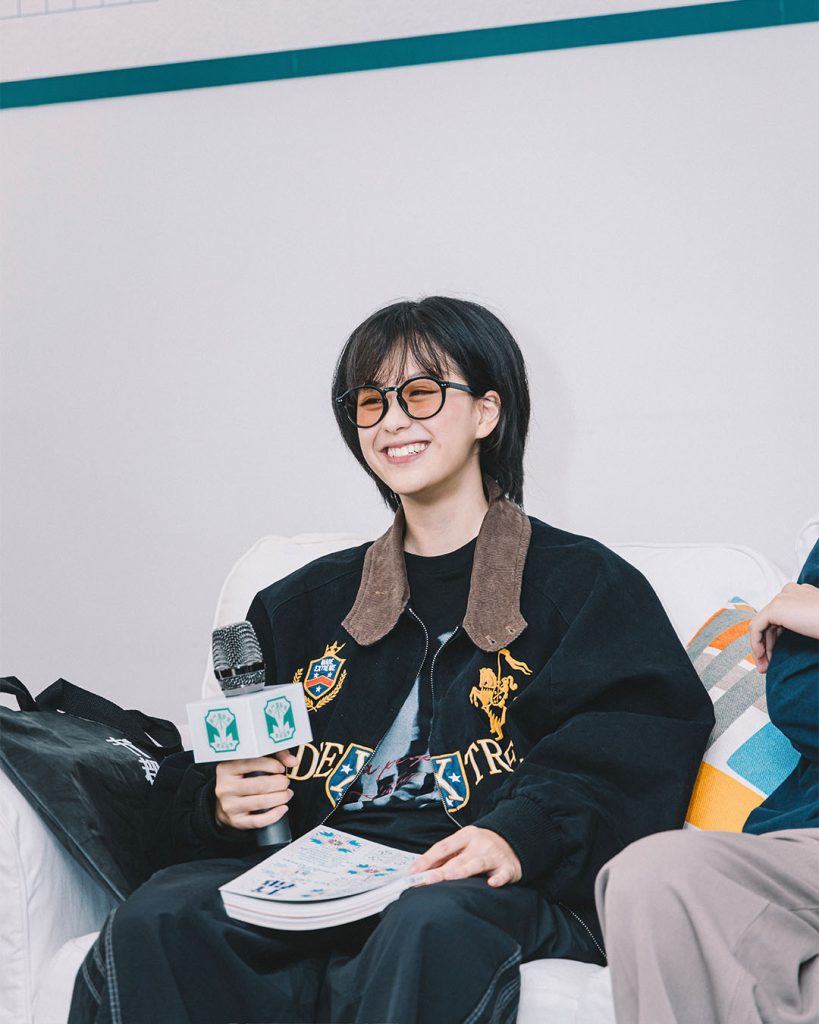
Currently based mainly in Beijing, she returned to Macao for the Literary Festival. We sat down with her to discuss her inner world of literary creation, the role of poetry in the modern world, and what we can gain from it.
How did you begin your literary career?
I have loved reading since I was young. In secondary school, I enjoyed writing little musings on social platforms. At that time, I didn’t really consider it “creation,” just a way of recording daily feelings. Online friends were my earliest readers.
It was also then that I began writing poetry. During adolescence, I often felt lonely. But words – especially poetry – became a vessel that could carry emotions. When I saw my thoughts turned into language, heavy feelings found a place to rest. I realized that writing could help me build a connection with the world.
How would you define Macao literature?
Macao literature is not just regional writing. It is local, but also global. Macao has overlapping histories: Chinese communities, Southeast Asian immigrants, Portuguese culture – all these cultural contexts continue to blend in today’s society. Because of this, Macao literature naturally possesses a kind of fluidity, forming a unique tension between identity, memory, language, and culture.
For me, writers in Macao can take this city as a starting point to understand the world: rooted in local history and reality, yet maintaining a cross-cultural vision, presenting Macao’s voice and position within the map of the Global South.
As a female poet born at the turn of the millennium, how does your work reflect this identity?
I grew up in an era where the internet and postmodern culture intertwined. Faced with alienated emotions, bodies, and ideas in modern society, I prefer to return in my writing to everyday, concrete life experiences – trying to reveal the great through the small, awakening the heart’s original stirrings from ordinary details. In a society that emphasizes efficiency and success, I hope poetry can remind people to rediscover the small, imperfect yet lovely aspects of daily life.
Women’s life experiences are also very important to me. I want to break away from traditional, singular patriarchal narratives. When writing about love, self, and relationships, I focus more on the subjectivity of Gen Z women: in love, there isn’t only pain and struggle. Equal and healthy love can also be written with depth and philosophical reflection.
When you create, what kind of readers do you imagine?
When writing, I rarely imagine a specific reader. It feels more like I’m conversing with a kind of “shared human feeling.” I’ve always hoped my words could cross boundaries of city, race, and language, reaching more universal human emotions.
In today’s Macao, what can poetry bring us?
In a densely built city, poetry offers people a chance to slow down. Poetry doesn’t necessarily solve problems, but it allows us to re-experience the details of life and re-appreciate existence itself. When we read poetry, even amidst skyscrapers and urban noise, we can still preserve a pure sense of feeling.
Which part of the world do you most hope to respond to through your work?
I care about the landscapes that are overlooked. Through writing, I hope to loosen some conventional perceptions. For example, beyond the world’s center, those life experiences and narratives wandering on the margins also need to be seen. The human world is not always beautiful; as humans, we feel confusion and sorrow. Therefore, I also want to write down tender moments. I believe literature is not only a way of observing the world, but also a way of helping people see light again.
Besides poetry, which genres and writers do you love most?
Essays and novels are of course indispensable, but recently I’ve been reading more scripts, interview collections, and popular science books. They may not directly enter the language of poetry, but they inspire me to understand life from different perspectives.
As for writers, I have always admired Emily Dickinson. I love her quality that transcends binary gender; her writing carries an androgynous spiritual power. Another author who has greatly influenced me is Virginia Woolf. Beyond her famous line “A woman must have money and a room of her own,” her words “I am rooted, but I flow” have also helped me shape my own outlook on life.
The 15th Macau Literary Festival runs until 15 March.