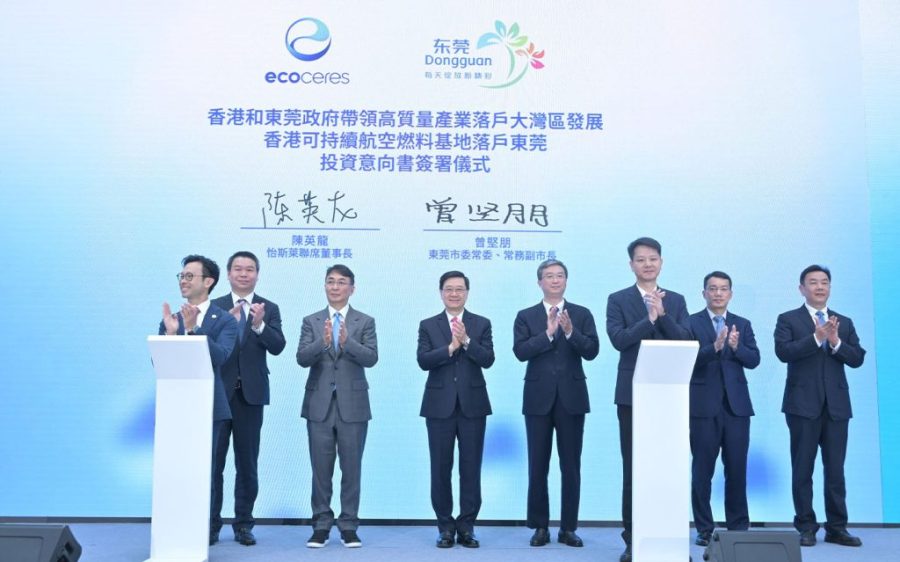
Hong Kong and Dongguan are joining forces to build what could become the Greater Bay Area’s first full industrial chain for sustainable aviation fuel (SAF), anchored by a HK$10 billion biofuel base in the manufacturing hub just across the border.
According to multiple media reports, the project is being led by EcoCeres, a Hong Kong‑incubated company that converts waste cooking oil into internationally certified SAF, in partnership with the Hong Kong and Dongguan governments.
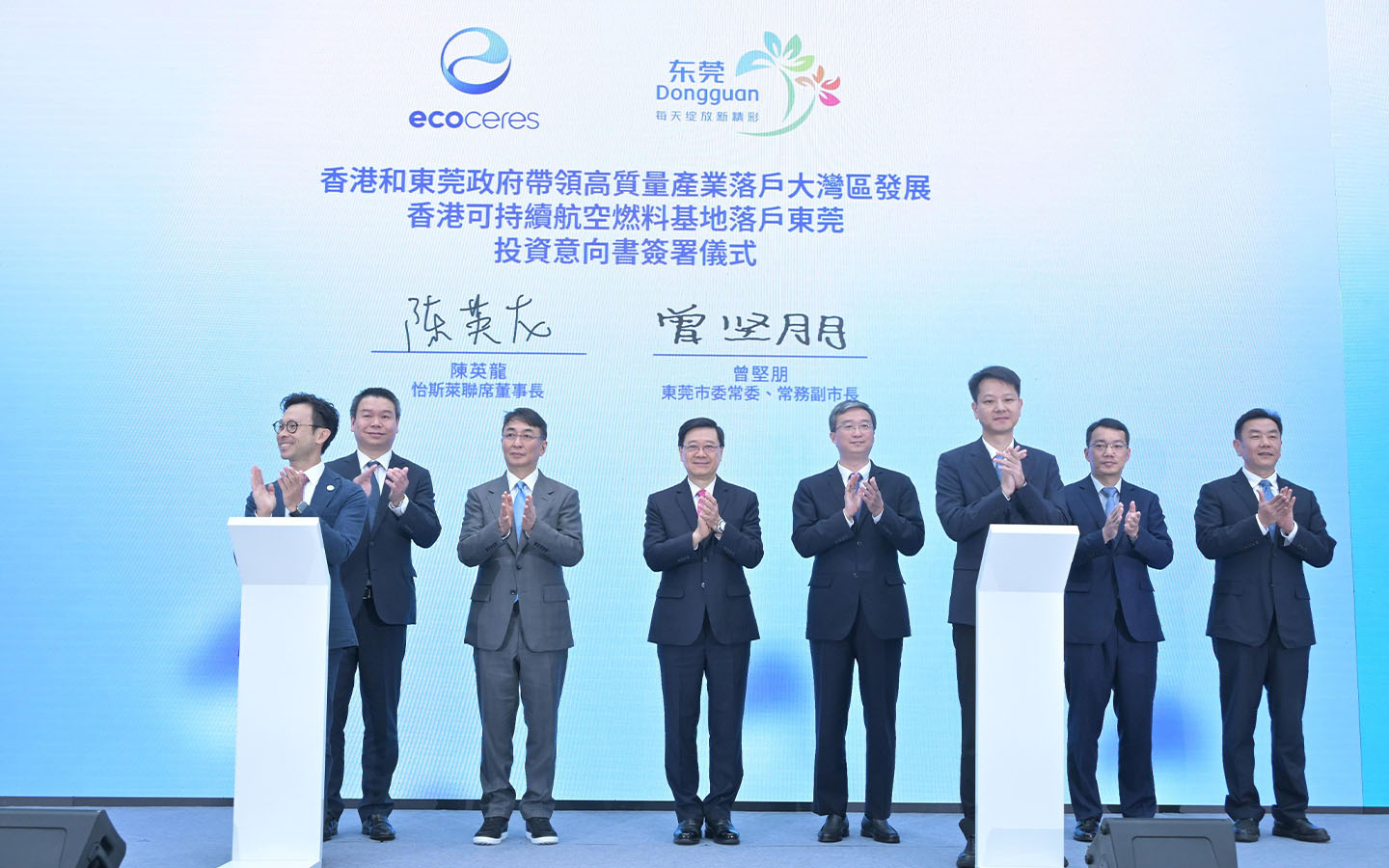
At a ceremony on yesterday, Chief Executive John Lee of Hong Kong and Dongguan Party Secretary Wei Hao witnessed the signing of an investment letter of intent that will see EcoCeres build a large‑scale SAF plant in Dongguan and establish Hong Kong’s first dedicated sustainable aviation fuel base there.
Scheduled for completion by 2030, the facility is expected to process locally collected waste cooking oil into around 450,000 tonnes of SAF a year, which will then be shipped by water to Hong Kong for blending with conventional jet fuel.
Lee described the collaboration as a “real milestone” that turns the current global energy disruption into “green opportunities” for Hong Kong and the wider Greater Bay Area.
[See more: Dongguan-Hong Kong logistics park records surging annual growth]
Traditional aviation fuel carries a heavy carbon footprint, but SAF can cut lifecycle emissions by more than 80 percent, he noted, calling the new base a substantial step toward greener aviation and a concrete action to implement the national green development strategy outlined in the 15th Five‑Year Plan.
Both sides are keen to emphasise the cross‑border division of labour. Hong Kong will contribute global financing, professional services and research capabilities, while Dongguan offers mature chemical industry parks, logistics and – crucially – a steady stream of used cooking oil from a population of more than 10 million.
EcoCeres co‑chairman Alan Chan said the company chose Dongguan after “careful consideration” of local policy support and feedstock availability, arguing that the city can underpin a stable, long‑term supply of waste oil.
The Dongguan base will sit within a broader push to decarbonise aviation out of Hong Kong International Airport. The SAR government has set an initial target for SAF to account for 1 to 2 percent of total jet fuel use on departing flights by 2030 and launched a Sustainable Aviation Fuel Coalition in 2024, bringing together Cathay Pacific, fuel suppliers and banks to aggregate demand and financing.